


What’s Actually Going On in Romantasy Right Now
- ayawinterromances
- Jan 7
- 3 min read
Updated: Jun 4
(A calm, grounded take. Not ragebait, not a clapback, just clarity)
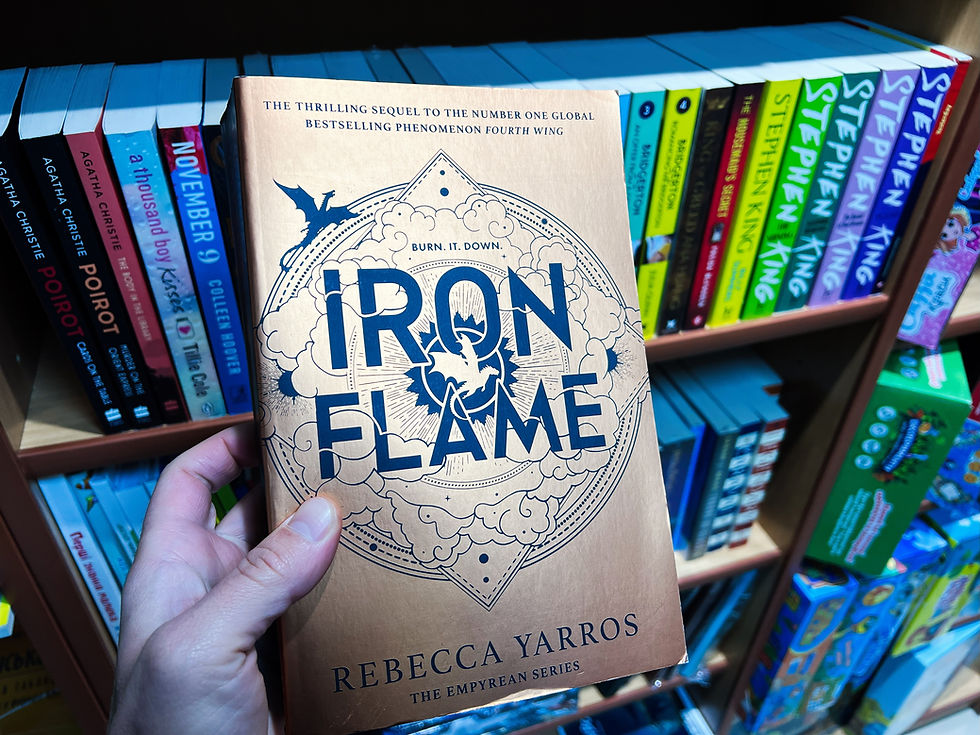
I want to say this thoughtfully, as someone who reads widely, writes across genres, and studies how stories actually work:
A lot of the chaos happening in Romantasy right now isn’t about books.
It’s about trend readership vs. genre readership.
And those are not the same thing.
1. ACOTAR and Fourth Wing created a wave, not a genre.
These books brought millions of new readers into fantasy.
That’s amazing.
But they’re gateway series, not genre blueprints.
When readers only engage with the viral wave and not the broader genre, they naturally expect:
• the same pacing
• the same romance-to-plot structure
• the same character archetypes
• the same emotional beats
• the same “special girl + brooding guy” dynamic
• the same digestible worldbuilding
So when a book doesn’t follow that formula, it gets labeled:
“bad writing,”
“problematic,”
“slow,”
“mid,”
“misogynistic,”
“poorly paced.”
That’s not critique.
That’s algorithm-shaped expectation.
2. Online discourse is being driven by content cycles, not craft.
We’re in a moment where:
• hot takes = visibility
• ragebait = engagement
• moral absolutism = virality
• simplified opinions = fastest to trend
Which is why we see things like:
• “Don’t write prologues.”
• “Dual POV is dead.”
• “Ban miscommunication.”
• “First person only.”
• “Third person is outdated.”
• “Enemies-to-lovers is toxic.”
• “Fated mates is problematic.”
These aren’t real craft discussions.
They’re content trends dressed up as craft advice.
If every writer followed these “rules,” we’d end up with the same beige, algorithm-approved book over and over again.

3. Genre evolution only happens because writers break the rules.
The biggest genre-defining works did things their own way:
• Stephenie Meyer made vampires sparkly and melodramatic.
• Anne Rice made them sensual, gender-fluid, and operatic.
• Suzanne Collins turned YA into a political arena.
• Sarah J. Maas rewrote fae lore into blockbuster fantasy romance.
• Rebecca Yarros revived the dragon rider subgenre for modern readers.
None of these stories would survive today’s “TikTok rulebook.”
4. The friction is between trend readers and genre readers, not between readers and writers.
Trend readers want:
• fast pacing
• familiar tropes
• cosplay-ready moments
• viral quotes
• predictable emotional beats
• accessible worldbuilding
Genre readers want:
• thematic depth
• structural risk
• complex arcs
• experimentation
• variation
• longevity
Neither group is wrong.
The tension happens when trend-trained expectations are treated as universal standards.
And when critique becomes less about reading and more about content farming.
5. Trend-reading discourages deep reading, and that’s what creators keep trying to point out.
Not because people are “stupid.”
But because:
• rapid consumption
• algorithmic feedback loops
• surface-level discourse
• viral hot takes
• moral absolutism
• and parasocial group-think train people to react, not reflect.
This isn’t about intelligence.
It’s about engagement habits shaped by the platform.
6. Writers cannot, and should not, write by committee.
If we let BookTok discourse dictate craft, we don’t get books.
We get products.
And storytelling becomes:
• safer
• flatter
• less risky
• less varied
• less artistic
• less interesting
That’s not why most of us write.
7. It’s okay not to vibe with a trope or structure. It’s not okay to police creativity.
Romantasy is not one monolith.
Fantasy is not one monolith.
Romance is not one monolith.
You’re allowed to dislike a story.
You’re not obligated to declare it morally bankrupt, badly written, or fandom-taboo just because it didn’t hit the trend-reader formula.
Reading widely is how you learn what you love, not how you flatten everything into the same structure.
8. Trend reading is not genre reading. And TikTok virality is not literary analysis.
If a story isn’t your flavour?
Totally fine.
But telling authors, creators, and entire fandoms that they must fit a TikTok-approved mould is how we lose:
• nuance
• innovation
• experimentation
• depth
• longevity
…and the creativity that made this genre explode in the first place.


Comments